Reading Big Books Makes You Look Smart.

The Twirl and Swirl of Letters

Today, I finished reading Victor Hugo’s Les Miserables. I opted to read an unabridged translation, my thought being “if I’m going to put in the time and effort to read this damn book, it may as well be the entire thing.” As a result, I picked up a huge book from the library, joking that it would free up a lot of shelf space…any ways, the librarian’s expression was one of surprise that I’d read this over my Christmas break. A trip to the doctor’s office elicited the same response–surprise from all who saw me lugging the massive tome about with me. Along with this typical exchange:

“What’s that?”

Les Miserables.”

(insert confusion)

“There was a musical based off of it. And numerous movies.”

“Why are you reading it?”

“Because I want to.”

I’m rather pleased that I finished the book when I did, so I don’t have to lug it through airport this following week. My back thanks me.

Returning to my impressions of reading this book.

Words…words sometimes fail, but I shall do my best.

At first I was bored. Bishop Bienvenu failed to capture my interest at first, but after a while of getting used to the book’s style, I found him a charming character.

Then, of course, we get to the main story lines. Fantine, Jean Valjean, the Thenardiers, Javert, Marius…ah! I loved how all of the characters’ lives intersected. There would always be someone from someone’s past showing up–be it Marius running to Javert, letting the police inspector know of devious dealings with his neighbors, the intersection of fate with Thenardier and Marius…

The digressions, which to many who attempt to read the book are off-putting I found incredibly interesting. I’ve wanted to visit the Paris sewers for years, but the whole digression was wonderfully informative. And the bit about nuns? Never knew a lot of that stuff. I felt that the digressions were fantastic for providing the context to the world Hugo created. Details about convent life aren’t things you learn regularly; heck, even basics about Waterloo are regularly skipped in history classes (I greatly enjoy the Napoleonic era, so I knew a small amount–still, always ready to learn more). Given my love of footnotes, this enjoyment of the digressions should come as no surprise.

What I loved most of all was how the characters were drawn. No character was completely good or completely evil. There was no perfection. Jean Valjean is haunted by his previous actions, by the theft that changes his life (ultimately for the best, but changes it nonetheless). The Thenardiers, as odious as they are, care for each other (to some extent…poor Gavroche and the younger sons), and are fascinating to read about. Javert, while he hunts Jean Valjean, isn’t a bad person–he sees the Law as Truth, and whatever does not fall within the Law is outside. The most ‘perfect’ character we have–Cosette–is beautiful but a bit of a dip.

The inner lives that the characters have was wonderful to read. Each of the characters thought, breathed of their own accords. Javert’s distress was brilliantly written…and my goodness, depressing to read. Even though I knew what was to come, his fate still stuck with me.

I loved it. I have a feeling that once I get my own place, I’ll be buying this translation, as I feel that each time I read Les Miserables, I’ll pick up new details. This is the sort of book that ought to be read at different points in one’s life. The fervor of youth, the complacency of middle age, the end of life, looking back on what you have done and what you have left undone.

Now, I’m not sure what to read next…

Anyone know of a good translation of War and Peace? Unabridged, of course.
Looking to 2011…and back on 2010

The Twirl and Swirl of Letters

As I sit on the brink of 2011, staring forward into the new year and back into the new, I can’t help but think that 2010 was a successful year. I failed at many of my goals for 2010 (write 1+short story a month–was successful until October; submit work/enter contests–nope, unless you count the art contest I entered in Florence; read more–success; write another novel–fail, but planned one and am starting a separate one).

Others I was more successful with. I don’t know if I’ve posted more this year than last, but I feel that the quality increased. I didn’t include more pictures (I just forget), but I did start the What’s On the Bookshelf? page, which is continuing into 2011, along with What’s Beth Watching?

But 2010 was a good year. I had a grand adventure in Florence and set my sights on another (grad school in the UK). I came up with an idea for a novel. I met one of my idols (and was not disenchanted by the meeting). And I started work on my epic thesis, which will be done in April (and there will be much rejoicing throughout the land).

So, for 2011, some goals:

1. Write more.

I write every night. I want to write more. Hopefully finish a novel, or work in earnest on the one that I’m co-writing.

2. Continue writing this blog (and Sheer Art Attack)

I like writing this blog. It’s fun. For Sheer Art Attack, I need to create more art pieces. I’m working on some of Michelangelo’s David for my mom.

3. Take time to notice the small things in life.

I’m taking this as my artist’s statement. To celebrate and appreciate the simple things. The Christmas tree lights. The hugs. Family. Nature.

4. Read for me.

Whatever takes my fancy, I’ll read. I’m itching to read Smiley’s People, adoring Les Miserables and anxiously awaiting more 44 Scotland Street books.

Happy Deathday, Mr Dahl

The Twirl and Swirl of Letters
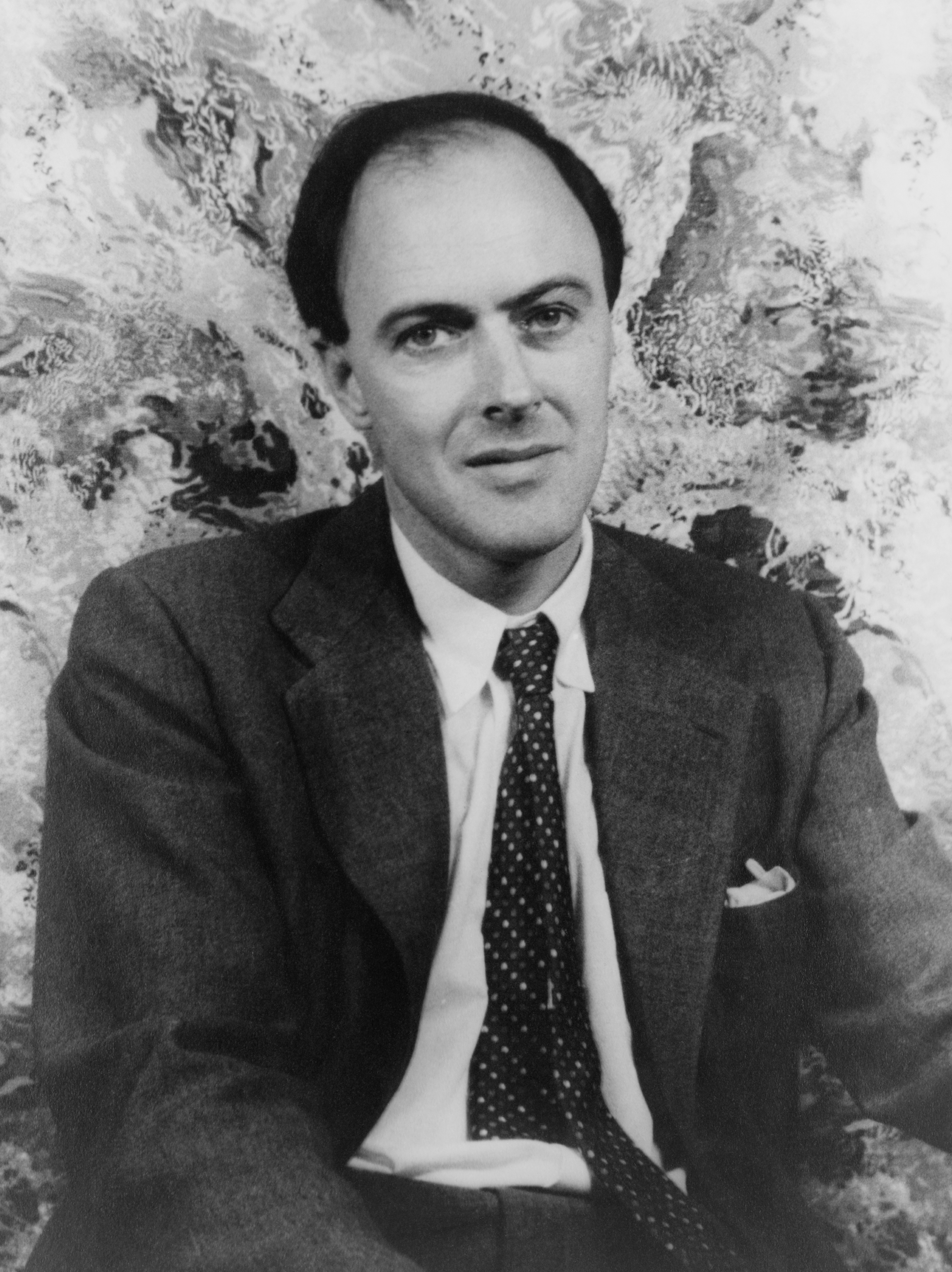
Roald Dahl

From Wikipedia. Photograph by Carl Van Vechten

Roald Dahl died 20 years ago today, 23 November 1990.

What can I say about one of my favorite writers that hasn’t been said before?

Roald Dahl, the writer who continues to weave his way through my life. As a child, I loved his books. I wanted powers like Matilda’s. I loved the story of the BFG. My sister had a Book On Tape of it, and we listened to that story on car rides to visit my grandparents or on family vacations. In elementary school, we read James and the Giant Peach during a very long fire drill. As a young child, I read Charlie and the Great Glass Elevator first, and never forgot those Vermicious Knids.

But then I hit that barren wasteland of middle school, where it was no longer cool to love his books. They were kids’ stuff, to be regulated to a far corner, to the back of our minds, to be remembered fondly but never admitted.

High School brought a return to the awesome. My prom theme was Golden Ticket, styled after the Gene Wilder movie Willy Wonka and the Chocolate Factory, complete with golden tickets, candy everywhere, and a (fake) chocolate waterfall. But still, I ignored the books.

Cue sophomore year of college. My roommate, the fantastic Holmes, got a copy of a collection of his adult short stories. She made me read “Genesis and Catastrophe”. I was hooked on the way my stomach felt after reading that story. I began to read more, to crave more. “Lamb to the Slaughter” introduced me to Alfred Hitchcock Presents, and the story “Beware of the Dog” brought me to 36 Hours (a really good thriller).

Through it, I read a book called The Irregulars, about Dahl’s time as a spy during WWII, which subsequently kicked off my interest in the RAF (or may have just helped to spawn it, I’m really unsure of how that came to be).

I’ve read most of his adult stories by this point. When I travel, I bring Over to You, a collection of his RAF stories, with me. It’s a slim book, perfect for sticking into a computer bag. I want to read My Uncle Oswald, a novel about his delightfully devious character of the same name.

Recently, Holmes and I have started rereading some of his children’s books. We recently finished Charlie and the Chocolate Factory. I never realized how delightful of a morality play it is. The evil children all meet their very fitting ends, all receive their punishments in accordance to their crimes. Its delightful how twisted the tale is. In rewatching the Gene Wilder movie, we realized how much it distorts the story, how it takes away from Charlie being such a deserving character. In the movie, he misbehaves as the other children do. And Grandpa Joe is such a bad influence in the movie.

Dahl’s wicked sense of humor appeals to all ages, from the child looking for a creepy bedtime story, to the adult looking for a good gut-twisting story. There’s a magic to his work, an appeal that transcends ages.

In honor of Mr Dahl, I shall be eating chocolate today (a favorite food of his, in fact, he allegedly was buried with some), and reading a portion of Over to You.

Read one of his short stories today. I promise that you won’t be disappointed.

Here’s to many more years enjoying Roald Dahl’s stories, the fantastic, the strange, the heartbreaking, the wicked.

The Joy of the Small Things in Life

The Twirl and Swirl of Letters

On October 25, I attended a lecture given by Alexander McCall Smith at the Boston Public Library.

McCall Smith is my favorite living writer, so the opportunity to hear him speak was an amazing opportunity. Apparently he was supposed to speak at the BPL last Spring, but the Volcano Incident kept him in Europe. All the better for me, as I was in Italy and would have been unable to attend the lecture.

His lecture was a funny, touching one, like his books. His main point was one quite close to me, a person on the brink of great wide world: find the joy in the little things in life. It isn’t the great, massive things that ultimately matter. It isn’t the grand adventures that we set out on, not the jobs we hold or how much we make (but I’m sure this helps), rather, it’s those moments of laughter, of friendship, of joy that create our lives. When I look back on my life, while I have had bright, brilliant memories, its those little moments of elation: I don’t remember why we laughing, only that we were, that we were having fun. That we enjoyed ourselves.

It isn’t the drama. It isn’t the news that defines our world, though it certainly impacts us. It’s the people we know and how we spend time with them. It’s that kind hello, that sweet smile. The invitation for a walk, the hug from a friend. That’s what our life is.

These ideas, the idea of friendship, of warmth, of love, are throughout his serial works, from The Number 1 Ladies Detective Agency series to 44 Scotland Street. That’s why I love them so much. You care for them, even the ones you didn’t like as much (Bertie’s mother the terrible Irene is one).

The highlights of the evening:

After the lecture, there was a brief question and answer session. I tentatively raised my hand, a thousand questions whirling about. I didn’t expect that I would be picked.

I blanked.

Somehow my mouth managed to say, “Do you laugh while writing your books?”

His response: “Yes. Sometimes my wife knocks on the door and asks me what’s so funny.”

He then recounted a scene in the forthcoming 44 Scotland Street book The Importance of Being Seven, where Bertie meets a boy who collects penknives.

That had me on cloud nine. Seeing my favorite author speak, his answering my question…and a book signing to follow.

Cue waiting in line. There, I chatted with those around me about Alexander McCall Smith’s books, travel and art.

Soon enough, it was my turn to speak briefly with Mr McCall Smith. We spoke no more than a minute or so, in which I thanked him for the speech and answering my question. I told him that his books made me happy and were an inspiration to me as a writer. He inquired about my work, and after I said I had written a novel that “wasn’t terribly good,” he said just to move on to the next one. Simple advice.

It was a pretty awesome night.

I’m still on cloud nine.

Life as a NaNo Rebel

The Twirl and Swirl of Letters, Thesis Updates

So, November is upon us. And with the falling leaves, brisk wind and blue skies here in Boston comes the season of flying papers, dead highlighters and balding college students. Why balding? We rip our hair out trying to stay sane.

Two years ago I participated in NaNoWriMo for the first time and won. I wrote a rather disappointing novel, but I wrote one. The experience showed me that I can write a novel, that it is possible to finish one if I have the proper motivation.

Last year, I knew I wouldn’t have the time to truly participate, so I wrote a short story and called it a day.

This year, it happened to fall that I have three major papers to work on over the month of November. They aren’t due until December, but I figured, why not use NaNo to rebel?

I’m doubling rebelling, as I started writing these early.

And will I reach a total of 50,000 words? I don’t know. Probably not. All I care is that these essays get completed well. And if I’m writing them, might as well take advantage of the little word count chart, eh?

Best of luck to all NaNo-ers, Traditional or Rebels!

Silence. Fearful, Hollow Silence: Sonic Atmosphere in The Exorcist

The Twirl and Swirl of Letters

This weekend, I watched the 1973 movie The Exorcist for the first time.

One thing that struck me about the film was the use of silence, the creeping, ever present lack of background accompaniment. The theme played twice (to my recollection), once when Chris is walking past the row of houses when returning from the set, and at the very end of the film.

The lack of an instrumental soundtrack adds to the encroaching foreboding persistent throughout the entire film. I found the quiet, the still, the calm, when contrasted with Regan’s wild, possessed moments, disturbing. It was the sense of waiting, of the knowledge of something darker just around the corner, that the silence portrayed so well.

The scene that struck me most was not one of horror, but one of desperate contemplation. It is the scene where Father Merrin and Father Karras are seated on the stairs, resting after the first round against the demon.  As they sit, deep within their own thoughts, worries and fears, the silence envelopes them. The viewer, who, like the two priests, has just been through the harrowing first part of the exorcism, rests, like them. The silence that surrounds the priests surrounds the viewer as well, a perfect mirror.

Just earlier that day, I was listening to one of the music channels. On the bottom of the page, the phrase “Choose Your Mood, On Music Choice” appeared. This seemingly innocuous phrase made my mind run.

The Exorcist does a good job of effecting one’s mood, even with the minimal soundtrack. The silence that permeates throughout the film gives a sense of alienation, heightened isolation.

The visuals, too, add a stark quality to the film that mirrors the lack of sound. The colors are muted. The set decoration is largely minimal. Much of the action surrounding Regan takes place in either hospitals or in her frighteningly Spartan room. Even the basement, often a site of clutter for many families, is eerily bare.

As a writer, this stark, empty, disconcerting quiet had me thinking about creating atmosphere in my writing. How would I go about conveying that encroaching, crushing quiet? My thought is minimal dialogue, short sentences, descriptive ones. Something to explore!

Note on the title: It sounds painfully academic. I’ve been doing research for my two theses–one is on The Prisoner, which has been somewhat documented here. The other is about Psycho and that’s the first mention of it.